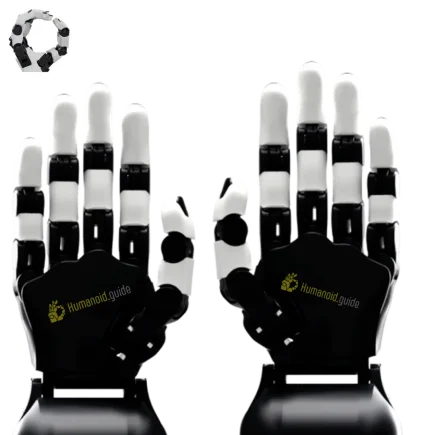
ORCA Hand
One-line judgment
ORCA Hand is the candidate for starting dexterous learning experiments with a reproducible, lower-cost hand instead of buying a high-end commercial platform. For flower work, its value is strongest when you expect to modify fingertips, compliance, or tactile sensing.
Key Specs
| Item | Value | Interpretation |
|---|---|---|
| ORCA v1 DoF | 17 DoF, 16 finger + 1 wrist | Enables hand and wrist posture experiments |
| Material cost | Under 2,000 CHF | Much lower entry cost than Shadow/Allegro class hands |
| Assembly target | Under 8 hours | Plausible for lab-built deployments |
| Learning experiment | Reported 7h17m and about 2,000 grasp cycles | Small-dataset policy experiments are plausible |
| 2026 family | Lite 9 DoF, Hand 17 DoF, Touch 17 DoF | Budget and tactile needs can be separated |
| Touch sensing | Reported 351 taxels per hand | Candidate for stem/petal contact classification |
Meaning for Flower Work
ORCA’s strongest point is not a finished commercial spec sheet; it is an open, modifiable hand platform. Flower manipulation will likely need fingertip shape changes, softer pads, and contact-sensing experiments, so a reproducible open design is a real advantage.
Best initial tasks:
- Grasp a single stem or stem bundle
- Hold folded wrapping paper in place
- Pull ribbon or tape ends without slipping
- Train a tactile classifier for “too much force”
Strengths
- Papers and project material make the design intent and reproduction path relatively transparent.
- The low-cost/open direction makes fingertip modification, added sensors, and part replacement easier to justify.
- The Touch line is relevant for tactile datasets around stems, petals, and soft contact.
Risks
- A build-it-yourself route introduces quality variation and maintenance work.
- ORCA Dexterity’s 2026 product line needs direct confirmation for availability, lead time, SDK, and support.
- Flower-shop realities such as moisture, debris, pollen, and pad wear cannot be inferred from paper specs alone.
Integration Checklist
- Decide whether the project needs a purchasable product or a lab-built open-source hand.
- Confirm CAD, BOM, firmware, control code, and license coverage.
- For tactile variants, verify raw tactile-stream access and calibration tooling.
- Measure fingertip-pad wear and replacement cost after repeated grasping.